Nagpur VCA Stadium Pitch Report BGT 2027: Red-Ball Test Guide
Share this article
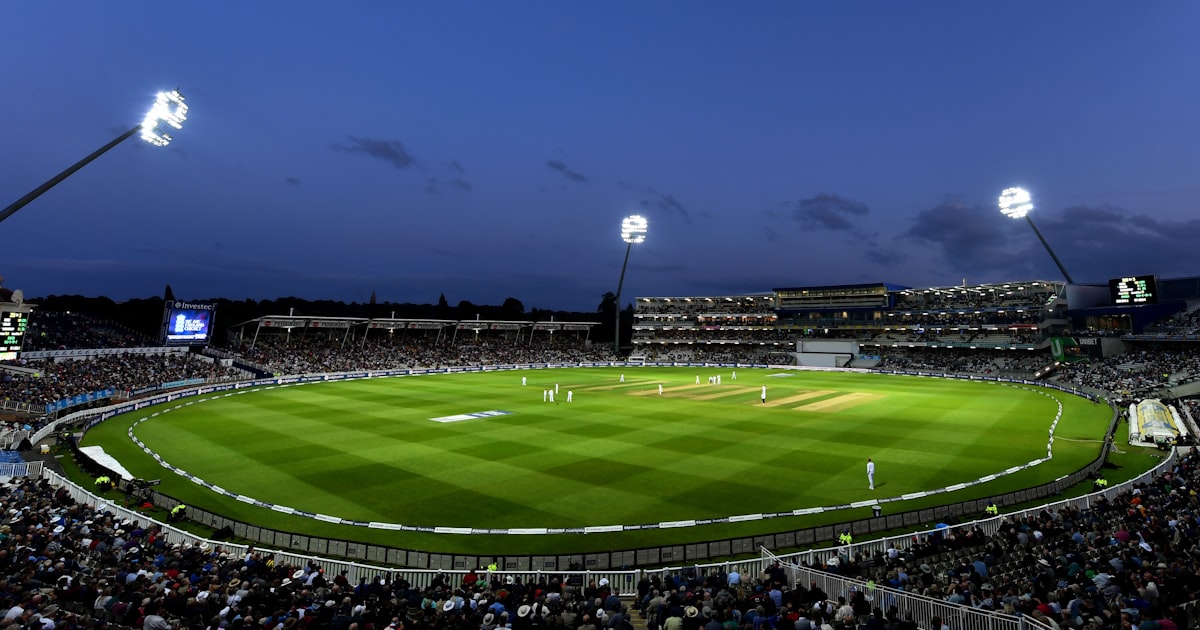
The Vidarbha Cricket Association Stadium at Jamtha is one of India's most reliably spin-friendly red-ball venues. For the BGT 2027 1st Test (January 21-25, 2027), the surface that India and Australia will play on has a strong historical signature — a slow-and-low first day, sharp turn from day two, and a well-known low-bounce death trap on day four.
This pitch report is built for red-ball Test cricket, not the IPL T20 surface that plays under lights at the same ground. The behaviour is profoundly different: ball rotation, day-by-day deterioration, footmark development, and the absence of dew make Test pitches a separate species from their T20 counterparts. For the IPL T20 read at Jamtha, see our VCA Nagpur IPL 2026 pitch report — the contrast is instructive.
Pitch character at a glance
- Surface type: Red soil, dry top, low grass cover
- Pace and bounce: Low to medium-low; rare carry beyond knee-roll height
- Turn: Significant from day two onwards; dust kicks up by day three
- Reverse swing: Reliable from over 35 onwards in both innings
- Toss preference: Bat first historically wins 8 of 12 decisive Tests at Jamtha
- First-innings par: 280-320
For the matching match preview, see our India vs Australia 1st Test Nagpur preview.
Day-by-day red-ball behaviour
Day 1: Slow, low, but trueish
The Jamtha day-one surface is firm on top, with the soil compaction holding bounce at a consistent low-medium level. Pace bowlers get minimal seam movement after the first 10 overs; the new ball offers a brief swing window if there is morning dew (rare in late January) or a cool breeze.
What the bowlers see:
- Pace: Hit-the-deck gets you nothing. Cross-seam length deliveries draw a leading edge to short cover; the wobble seam at 137-140 kph is the new-ball plan.
- Spin: Off-spinners grip immediately; left-arm orthodox (Jadeja) finds a small drift but no exaggerated turn.
What the batters see:
- Ball comes onto the bat slowly. Drives need to be timed, not hit. Cuts and pulls are the safest scoring shots.
- Par day-one score: 240-280 for 4-5 wickets. A team batting first to 320+ is in a strong position.
Day 2: Spin grip arrives
By the second hour of day two, the surface has dried out enough that finger-spinners get genuine grip. The Jamtha second-day surface is the most reliable session of the Test for spin bowling.
What changes:
- Spin grip: Both the off-spinner's drift and the left-arm orthodox's skid are now in play.
- Reverse swing: From over 35, the older ball hoops into the right-handers — a Jasprit Bumrah specialty.
- Variable bounce: Begins on the cracks at the Players' Pavilion End. Not yet decisive, but real.
Day 3: The decisive day
This is the day Tests at Jamtha are won or lost. Footmarks at both ends are fully developed; the ball is gripping the surface; and the spinners are bowling with three close-in fielders, including a leg-slip.
What plays:
- Spinner with grip and overspin: Nathan Lyon or Ravichandran Ashwin specifically. Drift, dip, and rip is the package.
- Spinner with revs and accuracy: Ravindra Jadeja's left-arm-orthodox stock ball lands every time and turns 6-9 inches off a length.
The team bowling on day three afternoon is the team most likely to win the Test.
Day 4: Variable bounce, low scoring
By day four, the surface is dust-on-top, with grip-and-rip variable bounce becoming a genuine risk. Dismissals come from:
- A spinner's ball that grips and shoots low past the front pad to crash into off-stump.
- A spinner's ball that grips and bounces sharply to take the gloves.
- A reverse-swung yorker hidden by dust.
Par fourth-innings chase: Anything 220+ is series-defining. 180-220 is competitive but tough. Sub-180 is genuinely chaseable for a top order with patience.
Day 5: Deterioration meets endurance
Most modern Tests at Jamtha do not reach day five — the result arrives by tea on day four. If a Test does reach day five, the surface is unrecognisable: dusty, pitted, and a draw-it-out batting effort by the team trying to save the match.
Recent Test history at Jamtha
- 2010 vs South Africa: South Africa won by an innings, a rare result against the spin-grip narrative — Dale Steyn 7 wickets in the match.
- 2017 vs Sri Lanka: India won by an innings and 239 runs.
- 2019 vs Bangladesh (day-night Test): India won by an innings and 130 runs; the pink-ball deteriorated identically to the red-ball pattern.
- 2023 vs Australia (BGT): India won by an innings and 132 runs in 3 days. The pitch was rated 'below average' by the ICC.
The cumulative ledger:
- First-innings average score: ~310
- Wickets per Test: 38 (slightly above Indian Test average)
- Spin wicket share: 67% (well above Indian Test norm)
- Pace wicket share: 33% (mostly reverse swing post over 35)
Turn vs bounce ratio
A Jamtha Test pitch produces:
- Turn: 8/10 (high)
- Bounce: 4/10 (medium-low; well below Indian Test average)
- Pace: 3/10 (slow)
- Carry: 3/10 (low)
This is the ideal pitch for finger-spinners with overspin and accuracy. Wrist-spinners (Kuldeep Yadav) get less reward here than they do on a higher-bounce subcontinent surface.
What plays vs spin (essential for BGT 2027)
The Jamtha pitch will be the truest test of Australian batting against high-quality spin in the entire BGT 2027:
Strategies that work:
- Use the depth of the crease: Steve Smith's extra step back to get past the spinner's line is the textbook Jamtha method.
- Sweep with control: Travis Head's aggressive sweep against turning balls outside off-stump can break the spinner's rhythm.
- Use the feet to the off-spinner: A premeditated step-out negates the drift.
Strategies that fail:
- Defend on the back foot to the turning ball: The low bounce produces inside-edges onto pad and bat-pad catches.
- Stay leg-side of the line: The drift back into the right-hander's pads finds an LBW.
- Charge without commitment: Stumped or caught at long-on.
For Australian batters, this is the Test where Smith's record-vs-Bumrah is one storyline, but Smith vs Jadeja and Sundar is the longer day-two and day-three story.
Fantasy XI advice
For fantasy XI selection at Jamtha:
Captain / vice-captain pool:
- Ravindra Jadeja (highest spinner volume, top-six bat)
- Washington Sundar (off-spin and lower-order runs)
- Steve Smith (most likely Australian centurion)
- Jasprit Bumrah (reverse swing wickets day two onwards)
Bowling stack:
- 3 spinners minimum (2 Indian, 1 Australian); Jadeja, Sundar, Lyon are the auto-picks.
- 1 Indian seamer (Bumrah) for reverse swing.
Batting stack:
- Top 3 Indian batters (Rohit, Jaiswal, Gill or Sudharsan).
- Top 3 Australian batters (Khawaja, Smith, Head).
Avoid:
- Australian seamers other than Cummins. Starc and Boland will struggle to pick up wickets at Jamtha if the surface plays as expected.
- Wicketkeeper-batters as captain unless Pant is in extreme form (the ball gripping at low bounce reduces glove-work value).
Pitch curator's likely brief
After the 2023 ICC 'below average' rating, the Vidarbha Cricket Association will be cautious about delivering an extreme surface. Expect a slightly more even pitch in 2027 — still dry, still spin-friendly, but with an extra mil of grass cover on day one and slightly more first-innings runs available before the spin grip kicks in.
The BCCI's Test-pitch brief in 2026-27 has been broadly consistent: produce result pitches that allow Tests to finish in 3-4 days, but avoid surfaces that the ICC rates poorly. Jamtha 2027 will fit that brief.
More cluster reading
- Match preview: India vs Australia 1st Test Nagpur preview
- Hub: BGT 2027 hub
- Other venue pitch reports: Pune MCA red-ball, Wankhede red-ball, Kotla red-ball, Motera red-ball
- T20 contrast: VCA Nagpur IPL 2026 pitch report
- WTC context: WTC 2025-27 cycle explainer, WTC India simulator
- Calendar: Cricket calendar 2026-27
Frequently Asked Questions
Does the Nagpur Test pitch turn from day one? No. Day one at Jamtha is slow but trueish; spin grip arrives meaningfully from the second session of day two. Day three is the decisive day for spin dominance.
How is a Nagpur Test pitch different from the IPL T20 pitch? Test pitches at Jamtha are dry, low-grass, and break up across five days. The IPL T20 surface is firmer, with shorter boundaries and dew impact at night. The two are entirely different surfaces despite being at the same venue.
What is a par first-innings score at Nagpur in a Test? 280-320. A team batting first to 320+ is favoured to win; below 280 is competitive but tough.
Does reverse swing matter at Jamtha? Yes. From over 35 in both innings, the older ball reverses sharply for pace bowlers — particularly for Bumrah's wobble-seam release.
Should I avoid Australian seamers in fantasy XIs at Nagpur? Cummins is the exception (he gets the new ball and can break partnerships). Starc and Boland are typically low-value at Jamtha unless the pitch is unusually grassy.
The Jamtha surface is the most spin-friendly opener of the BGT 2027. Australia know it; India have built their attack around exploiting it. The 1st Test will play out exactly along these contours.
Share this article
Rahul Sharma
Expert in: Domestic CricketRahul Sharma has played district-level cricket in Mumbai for 8 years and has personally tested more than 50 bats, pads, gloves, and helmets across different price ranges. He joined CricJosh to help Indian club cricketers make smarter equipment choices without overpaying. His reviews are based on real match and net session use, not sponsored samples.
Why trust this review: Rahul has used every product in this review across multiple match and net sessions before writing a word. He buys equipment at retail price and accepts no free samples.
Related Articles
8 min read · 2 May 2026