Mumbai Wankhede Pitch Report BGT 2027: Red-Ball Test Guide
Share this article
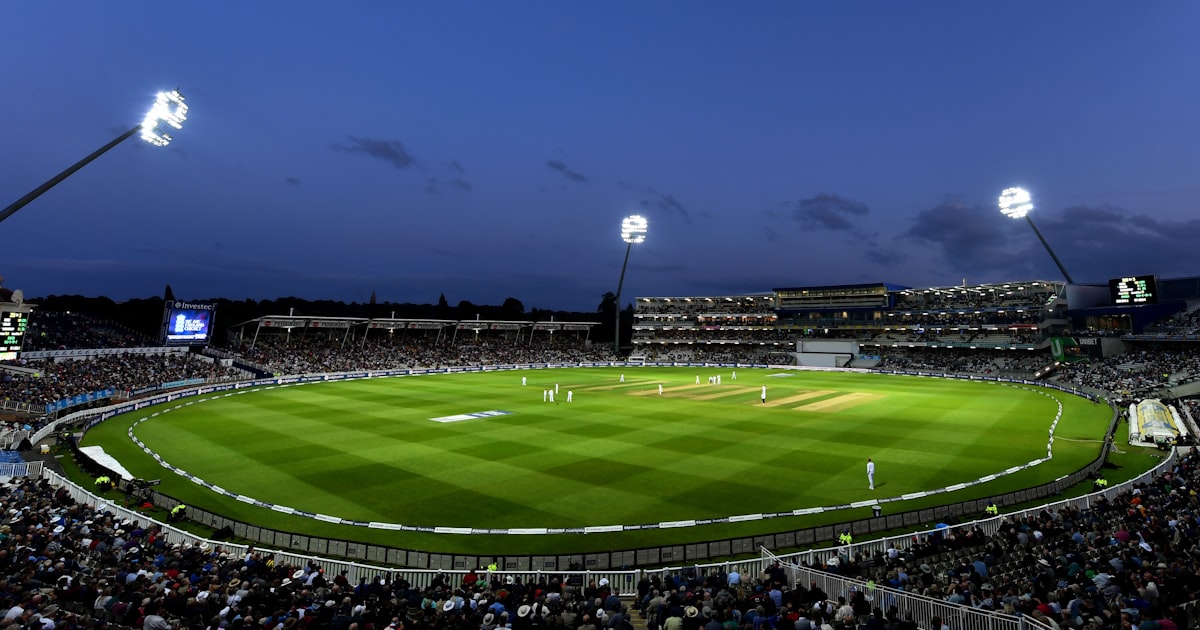
Wankhede Stadium is the most distinctive red-ball Test surface in India. Of the four likely Indian Test venues for BGT 2027 outside Nagpur, Wankhede is the one where pace bowlers genuinely earn their wickets, where reverse swing is the most reliable bowling weapon, and where the sea breeze that rolls in by the lunch session changes the bowling-friendliness of the surface in a way no other Indian Test pitch experiences. For the BGT 2027 3rd Test (provisionally February 6-10, 2027), this guide breaks down the red-ball behaviour day-by-day and how it differs from the famous Wankhede T20 surface.
For the IPL T20 read at Wankhede, see our Wankhede IPL 2026 pitch report. The Test surface and the T20 pitch are profoundly different — different soil mix, different grass cover, and an entirely different relationship with the sea breeze.
Pitch character at a glance
- Surface type: Red soil with a high silica content; harder than Pune or Nagpur
- Pace and bounce: Medium-high; the highest carry of the four likely BGT 2027 Indian Test venues outside the home ground swap-ins
- Turn: Moderate from day three onwards (later than Nagpur or Pune)
- Reverse swing: Most reliable in India; from over 25 onwards in both innings
- Toss preference: Bat first wins 7 of 11 decisive Tests at Wankhede
- First-innings par: 350-400
For the matching match preview, see our India vs Australia 3rd Test Mumbai preview.
Day-by-day red-ball behaviour
Day 1: True bounce, swing in the morning hour
The Wankhede surface is firm and bounces true on day one. The first 8 overs are the swing window — particularly with the cool morning air and the slight breeze before the sea breeze takes over.
What plays:
- Pace with movement: New-ball seamers get a 25-30 minute swing window. Cummins from the Garware End is exactly the threat.
- Pace without movement: Once the swing window closes, hard lengths bounce true and offer little.
- Spin: Holding option only. Drift, no grip.
Par day-one score: 280-320 for 3-4 wickets. A team batting first to 380+ is in a strong position.
Day 2: Reverse swing arrives
The Wankhede outfield, particularly the patches near the boundary rope, is one of the most abrasive in India. By over 25, the older ball reverses sharply. Bumrah's second-spell pace from the Garware End is, by some distance, the most lethal bowling option of the BGT 2027.
What changes:
- Reverse swing: Sharp from over 25 onwards. The yorker length becomes a wicket-taking option.
- Spin: Off-spinners begin to get drift. Left-arm orthodox finds slight skid.
- Variable bounce: Begins on the cracks at the Pavilion End by tea on day two.
Day 3: Spin grip, reverse continues
By day three, the surface has dried out enough that finger-spinners get their first real grip. But unlike Jamtha or Pune, day three at Wankhede is not the dominant spinning day — the surface remains slightly more pace-friendly through the middle of the Test.
What plays:
- Reverse-swung yorkers: The wicket-taking option for both sides.
- Spinner with overspin: Lyon and Ashwin get sharp turn off the rough at the Sachin Tendulkar End.
Day 4: Decisive day
Wankhede day four is the decisive day for Tests, more so than day three. Variable bounce becomes a real factor; reverse swing is at its sharpest; spin from the rough is genuine.
Par fourth-innings chase: Anything 280+ is a stretch. 240-280 is a contest. Sub-240 is genuinely chaseable for a top order with patience.
Day 5: Variable bounce dominates
Modern Wankhede Tests do not always reach day five — the result is often by tea on day four. If they do, day five is dominated by variable bounce and reverse-swung yorkers. The surface itself is rarely the issue; the team holding their nerve is.
Recent Test history at Wankhede
- 2012 vs England: England won by 10 wickets. Monty Panesar and Graeme Swann took 19 wickets in the match — the famous Mumbai upset.
- 2016 vs England: India won by an innings and 36 runs. Ashwin 12 wickets in the match.
- 2023 vs England: India won by 5 wickets in the closest Test of the BGT-prelude series.
- 2024 vs New Zealand: New Zealand won by 25 runs. Ajaz Patel 11 wickets in the match.
Cumulative ledger:
- First-innings average score: ~360
- Wickets per Test: 38
- Spin wicket share: 55%
- Pace wicket share: 45% (highest among likely BGT 2027 venues)
Turn vs bounce ratio
- Turn: 6/10 (moderate)
- Bounce: 8/10 (high — best in the BGT 2027 rotation)
- Pace: 6/10 (medium-high)
- Carry: 8/10 (high)
This is the most balanced Test surface among likely BGT 2027 venues. Wrist-spinners (Kuldeep) get genuine value here because the high bounce produces top-edges and gloves. Pace bowlers get reverse swing reliably.
The sea breeze factor
The defining variable at Wankhede that no other Indian Test venue shares is the mid-morning sea breeze. Coming in from the Arabian Sea (off the Garware End), the breeze typically picks up around 12:30 PM and intensifies through the afternoon.
What it does:
- Pre-12:30 PM: Cool, swing-friendly air. Cummins/Starc from the Garware End get genuine inswing.
- Post-12:30 PM: Drying air, swing window closes, but the breeze starts cross-cutting and helps reverse swing for the older ball.
- By 4 PM: Sustained 8-12 kph cross-breeze. The reverse-swing line for left-armers becomes very hard to play.
This breeze has decided multiple Tests at Wankhede over the last decade. It is the single most undervalued factor in Wankhede Test cricket.
What plays vs spin (essential for BGT 2027)
Wankhede is the most batting-friendly likely Test venue for Australia in BGT 2027. The high bounce gives Australian batters more options:
Strategies that work:
- Drive on the up: Smith and Head on a Wankhede day-one surface should drive freely.
- Cut and pull: The high bounce makes back-foot scoring shots reliable.
- Use the depth of crease: Standard subcontinent method continues to work.
Strategies that fail:
- Defend the rough outside off (right-handers): The high bounce produces gloves to slip.
- Charge without commitment to the spinner: Lyon will adjust to back-of-length.
Fantasy XI advice
Captain / vice-captain pool:
- Jasprit Bumrah (reverse swing volume — Wankhede is his most lethal venue)
- Steve Smith (Wankhede day-one is the most batter-friendly session of the series)
- Pat Cummins (the only Australian seamer to translate at Wankhede)
- Rishabh Pant (Wankhede high bounce rewards his batting style)
Bowling stack:
- 2 Indian seamers (Bumrah, Siraj)
- 2 spinners (Jadeja, Lyon — bare minimum)
- 1 Australian seamer (Cummins)
Batting stack:
- Top 4 from each side. Wankhede day-one is genuinely good for batting; even the lower middle order has scoring potential.
Avoid:
- Wrist-spinners as captain (Lyon's and Kuldeep's wicket counts are limited at Wankhede)
- Australia's third seamer if it is Boland (better at Test grounds elsewhere; Wankhede is Cummins-and-Starc territory)
Pitch curator's likely brief
The Mumbai Cricket Association has produced consistent, well-rated Test surfaces over the last decade. No ICC sanctions. The brief for BGT 2027 is straightforward: a result Test that finishes in 4-5 days, with both pace and spin in play. Expect a slight grass cover on day one — typical Wankhede preparation — and the standard wear pattern across days two through five.
More cluster reading
- Match preview: India vs Australia 3rd Test Mumbai preview
- Hub: BGT 2027 hub
- Other venue pitch reports: Nagpur VCA red-ball, Pune MCA red-ball, Kotla red-ball, Motera red-ball
- T20 contrast: Wankhede IPL 2026 pitch report
- WTC context: WTC 2025-27 cycle explainer, WTC India simulator
- Calendar: Cricket calendar 2026-27
Frequently Asked Questions
Does the Wankhede Test pitch turn? Yes, but later than Nagpur or Pune — typically day three onwards. The high bounce makes wrist-spin a genuine weapon at Wankhede in a way it is not at slower surfaces.
How is a Wankhede Test pitch different from the IPL T20 pitch? The Test surface has more grass cover, a different soil mix, and behaves with reverse swing as the dominant bowling weapon. The T20 pitch is shorter-boundary, dew-affected at night, and pure batter-friendly. Entirely different conditions.
What is a par first-innings score at Wankhede in a Test? 350-400. Wankhede day-one is the most batting-friendly first day among likely BGT 2027 Indian venues; a team batting first to 400+ is heavily favoured.
Does the sea breeze actually affect Test cricket? Yes. The mid-morning breeze closes the new-ball swing window earlier than at most Indian venues; the afternoon cross-breeze helps reverse swing for the older ball. Both effects are documented across the last decade.
Is Bumrah's record better at Wankhede than other Indian venues? Yes. The combination of bounce, reverse swing, and the sea breeze make Wankhede Bumrah's most productive Indian Test venue. He averages well below 20 with the ball there.
Wankhede in February is, on paper, the best red-ball Test pitch of the BGT 2027 rotation. We will be tracking the surface across all five days.
Share this article
Rahul Sharma
Expert in: Domestic CricketRahul Sharma has played district-level cricket in Mumbai for 8 years and has personally tested more than 50 bats, pads, gloves, and helmets across different price ranges. He joined CricJosh to help Indian club cricketers make smarter equipment choices without overpaying. His reviews are based on real match and net session use, not sponsored samples.
Why trust this review: Rahul has used every product in this review across multiple match and net sessions before writing a word. He buys equipment at retail price and accepts no free samples.
Related Articles
8 min read · 2 May 2026