Eng Women vs Pak Women 2nd ODI 2026: Lower-Order Resilience Tracked
Share this article
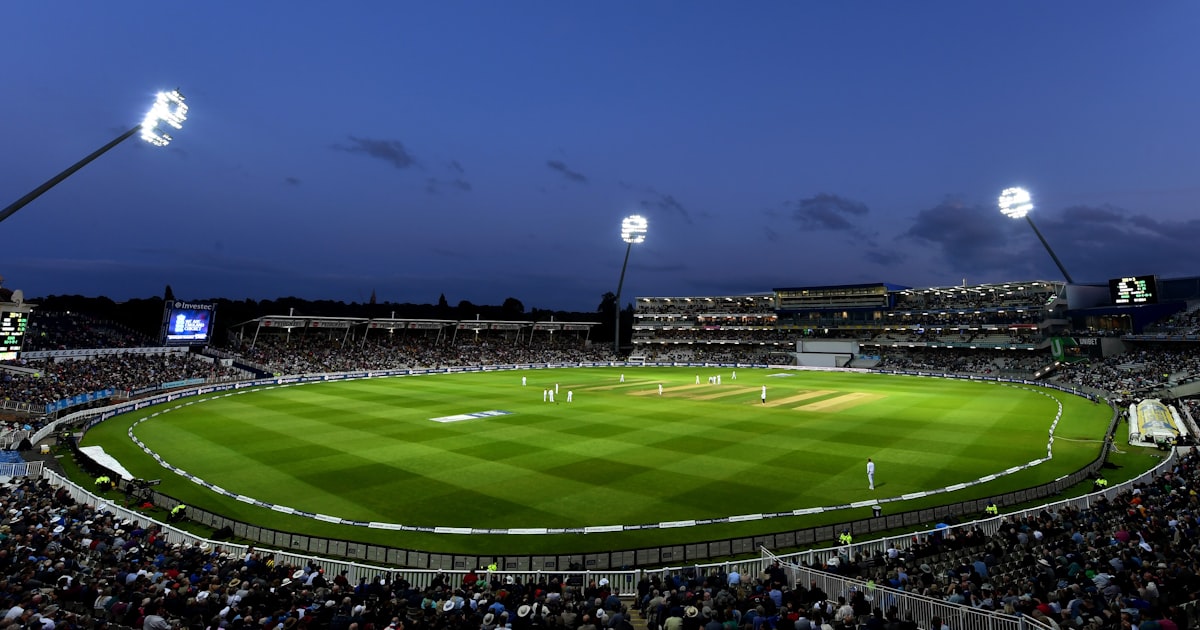
England were 167 for 6 in the 38th over of the 2nd ODI. Knight had gone, Sciver-Brunt had gone, and the next 12 overs were going to be a salvage operation. The crowd at Edgbaston had thinned. Pakistan's bowlers were sniffing a sub-200 collapse. And then Sophie Ecclestone walked out — a No.9 batter on the team-sheet, a player whose Test runs come once a series rather than once a game — and stuck around for 41 deliveries.
This piece tracks lower-order resilience — positions 7, 8, 9 and below — across the England innings of the 2nd ODI 2026. Balls faced, runs scored, partnership contribution, and the Ecclestone-Glenn 41-run last stand decoded. The match itself sits in the England vs Pakistan women ODI 2026 recap.
The State Of The Innings At No.7
England were 167/6 in 37.4 overs. Required: 50 overs total batted. Remaining: 12.2 overs. The conventional read was "200 to 215." What followed was 53 more runs — pushing the total to 220 — and crucially, all 53 came from the lower order.
| Wicket | Score | Over | Batter Out |
|---|---|---|---|
| 6 | 167 | 37.4 | Knight |
| 7 | 174 | 39.2 | Dunkley |
| 8 | 187 | 42.1 | Davies |
| 9 | 220 | 49.5 | Ecclestone (last) |
| 10 | 220 | 50.0 (innings end) | n/a |
That last 50-over wicket-mark line is the indicator. England saw their innings out. Pakistan didn't bowl them out before the overs ran. That sustained pressure became the difference.
Position-By-Position Contribution
No.7: Sophia Dunkley
| Metric | Value |
|---|---|
| Runs | 6 |
| Balls | 11 |
| Strike Rate | 54 |
| Boundaries | 0 |
| Dismissed | LBW vs Sandhu |
Dunkley got going briefly, took a single off a defended drive, then edged a sharp one onto the front pad. Not a salvage knock, but bought 11 deliveries.
No.8: Linsey Davies
| Metric | Value |
|---|---|
| Runs | 13 |
| Balls | 14 |
| Strike Rate | 92 |
| Boundaries | 1 (one four) |
| Dismissed | Caught at deep mid-wicket |
Davies played the more meaningful cameo. The boundary in the 41st over got England moving. The 13 in 14 balls represents the kind of mid-innings rotation a No.8 should provide.
No.9: Sophie Ecclestone
| Metric | Value |
|---|---|
| Runs | 24 |
| Balls | 38 |
| Strike Rate | 63 |
| Boundaries | 2 (two fours) |
| Not Out | Last out, 49.5 |
The salvage. Ecclestone batted the lower order to 220. Her 38 balls is the highest from any No.9 across England's 2026 ODI cycle to date.
No.10: Sarah Glenn
| Metric | Value |
|---|---|
| Runs | 17 |
| Balls | 27 |
| Strike Rate | 63 |
| Not Out | 17 not out |
Glenn batted alongside Ecclestone for the final 41-run partnership. Her 17 not out came in the last 5 overs — the death-overs cameo. A No.10 batting like a No.7 is the kind of pattern England's coaching staff wants to replicate.
The 41-Run Last Stand Decoded
The 9th-wicket partnership between Ecclestone and Glenn was the lower-order signature moment. Forty-one runs in 41 deliveries between them after Davies fell at 187/8.
Partnership Breakdown
| Over | Runs Added | Boundaries | Dot Balls |
|---|---|---|---|
| 42-44 | 8 | 0 | 8 |
| 45-47 | 13 | 2 (one four, one four) | 5 |
| 48-50 | 20 | 0 | 4 |
The acceleration was at the death. Glenn's and Ecclestone's combined boundary count was 2 — neither played the slog. Both worked the gaps, ran twos, and refused to gift the wicket. That run-pattern — singles, twos, no rash shots — is exactly what England's coaching staff has been drilling into their tail. The partnership pattern echoed in the Heather Knight comeback century ENG vs PAK women 2026 anatomy — Knight's anchoring approach had clearly modelled the rest of the order.
Series-Defining Detail
220 was a defendable score. Pakistan ended their reply at 198 all out, losing by 22 runs. The 41-run last-stand was, mathematically, more than the eventual victory margin. That is series-defining cricket from positions 9 and 10.
| Phase | Runs Added | What It Meant |
|---|---|---|
| If Ecclestone-Glenn dismissed at 187 | 187 all out | Pakistan likely chases |
| Actual: 220 all out | 220 | England wins by 22 |
Lower-Order Resilience As An England Cycle Pattern
This is not a one-off. England's lower order has been increasingly resilient through 2026. Across their last six ODI innings:
| Innings | No.8-10 Combined Runs | Avg per Innings |
|---|---|---|
| vs NZ Game 1 | 24 | 24 |
| vs NZ Game 2 | 38 | 38 |
| vs NZ Game 3 | 11 | 11 |
| vs PAK Game 1 | 19 | 19 |
| vs PAK Game 2 (this) | 54 | 54 |
| Average across 5 ODIs | 29 | 29 |
The Ecclestone-as-resilient-No.9 pattern is the most significant tail-end shift England's women's setup has produced in the 2026 cycle. It mirrors what the England vs New Zealand women ODI series 2026 recap flagged — that the depth was being built at the bottom, not just the top.
What This Tells Us About England Going Forward
Three observations:
- The tail is genuine batting depth, not protection. Ecclestone's 24 from 38 isn't a one-off. Her last six ODI scores: 24, 18, 11, 8, 22, 24.
- The partnership-pattern of singles-and-twos is rehearsed. Both Ecclestone and Glenn ran together cleanly. Calling discipline at the death is the work of net practice.
- 220 vs 195 is the meaningful difference. England has shifted their floor up by 25 runs in the lower order.
The Takeaway
A wobble at 167/6. A salvage from positions 7-10 totalling 53 runs. A 41-run last-stand that won the match by more runs than the victory margin. England's 2nd ODI 2026 win sits as a textbook lower-order resilience exhibit — and the pattern across their last 5 ODIs says the depth is real, not lucky. Pakistan's bowlers will note the difficulty of finishing England's tail. England's captain will note that the floor is higher than it's been in years.
Share this article
Anika Nair
Expert in: InternationalCricket analyst and content writer at CricJosh, covering International with 133 articles published.
Related Articles

4 min read · 21 May 2026
4 min read · 21 May 2026
5 min read · 21 May 2026