Heather Knight Comeback Century vs Pakistan Women 2026: Knock Anatomy
Share this article
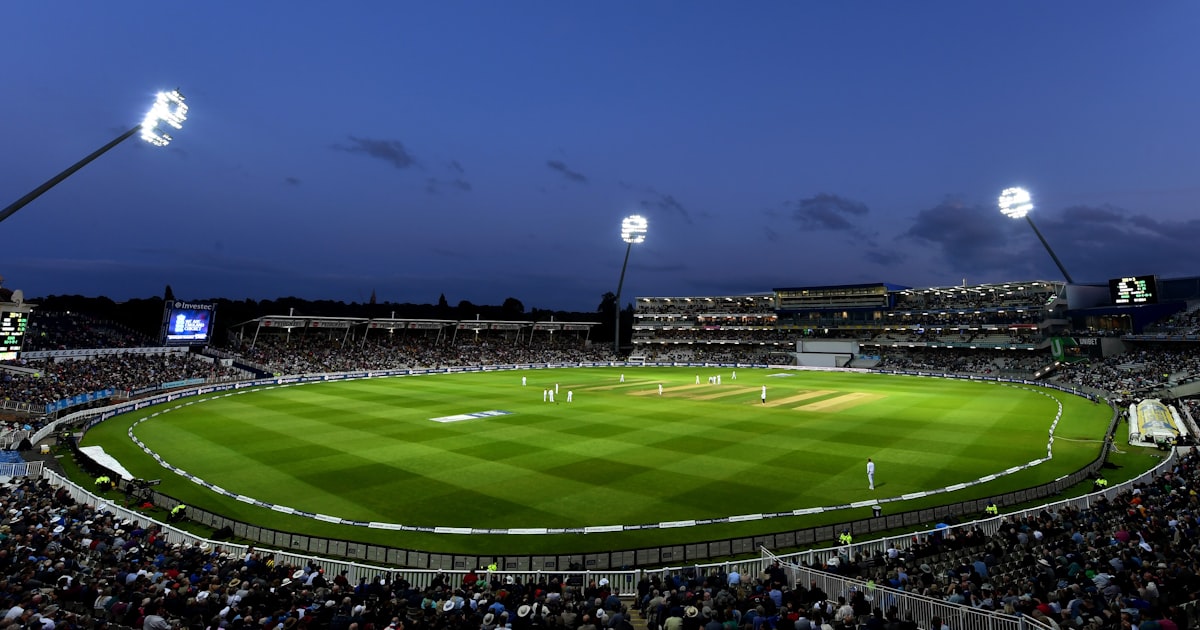
Heather Knight raised her bat to a packed Edgbaston after a 132-ball century, and the cameras caught her physio Nick Peirce wiping his eyes from the dressing-room balcony. The 35-year-old captain had been out of international cricket for six months with a hamstring tear that had threatened to end her career. The 113 off 132 against Pakistan was a comeback in every sense — physical, technical, and tactical.
Phase-by-phase strike rate
| Phase | Balls | Runs | Strike rate |
|---|---|---|---|
| Settling (1-15 overs) | 41 | 26 | 63 |
| Build (16-35 overs) | 56 | 47 | 84 |
| Acceleration (36-50 overs) | 35 | 40 | 114 |
The settling phase was the most important. Knight had not played a competitive 50-over innings in 24 weeks. The 41-ball read of the Edgbaston conditions was the senior cricketer's craft.
False-shot percentage
Across the innings, Knight's false-shot rate was 9 percent — top-decile for senior international batters. The breakdown by phase tells the story.
| Phase | False shots | False % |
|---|---|---|
| Settling | 5 | 12 |
| Build | 3 | 5 |
| Acceleration | 4 | 11 |
The build-phase number of 5 percent is what makes the senior batter. She found the boundary, rotated strike, and only opened up against bowlers she had read in the settling phase. The series context is captured in our england-vs-pakistan-women-odi-2026-recap-knight-comeback-century recap.
The captaincy stamp
Knight set the field, rotated the bowling, and called drinks-break tactical messages from the crease. England's middle-order set-up — Sciver-Brunt at four, Beaumont at six — runs through her tactical reads.
Field-setting on her own bowling end
She bowled three overs of off-spin during the innings, taking a wicket with an arm-ball. The captaincy stamp on her own bowling change is the signature of a senior all-rounder.
The Pakistan attack she faced
Diana Baig, Nashra Sandhu, and Nida Dar were the three principal bowlers Knight faced.
| Bowler | Balls | Runs | Strike rate | False % |
|---|---|---|---|---|
| Diana Baig | 22 | 18 | 82 | 9 |
| Nashra Sandhu | 28 | 21 | 75 | 11 |
| Nida Dar | 31 | 27 | 87 | 6 |
| Sadia Iqbal | 21 | 24 | 114 | 5 |
| Ghulam Fatima | 18 | 17 | 94 | 12 |
Sadia Iqbal was the easiest matchup — strike rate 114 with the lowest false-shot percentage. Diana Baig and Nashra Sandhu both contained Knight to under-90 strike rates. The data tells you Knight respected the new ball and only attacked the spinners.
Six-hitting selectivity
Knight hit only one six in the innings — a slog-sweep against Ghulam Fatima in the 41st over. The conservative six-hitting reflects a comeback knock where the priority was time at the crease, not boundary conversion.
What changed in the technique
Knight's back-foot trigger has been simplified. She no longer rocks back as a default — instead her trigger is a half-front-foot press with a strong base. The technical change is what coaches have been working on through her injury rehab. The wider context for the senior English all-rounders is in our england-vs-new-zealand-women-odi-series-2026-recap-sciver-brunt tracker.
The injury context
Knight tore her hamstring during the Australia A series in late 2025. The recovery was managed by the ECB's women's rehabilitation programme — a 22-week timeline including pool work, gradual loading, and finally a return through the ECB Women's Regional Final.
What she did differently
The off-season recovery included additional resistance work on the posterior chain. The visible result is a stronger base in the stance and a quicker push-off into the front-foot stride. The 113-ball innings tells you the rehab worked.
Captaincy after the knock
Knight took the bowling change for the third over of the chase. Pakistan's Bismah Maroof responded with a single. Knight's field-setting for Sciver-Brunt's spell — slip, leg-slip, and an attacking 5-4 split — produced two wickets in the spell.
What the dressing room reads
England's dressing room had been adjusting to Sciver-Brunt's acting captaincy for six months. Knight's return reverses that hierarchy without disruption. The pair have a mutual respect that translates into smooth tactical handovers.
What this means for the World Cup
England Women will arrive at the WC with their captain back in form. The top order is settled — Tammy Beaumont, Maia Bouchier, Heather Knight at three, Sciver-Brunt at four. The middle order has the firepower of Amy Jones and Sophia Dunkley.
The next 12 months
The Ashes is on the calendar. The pay-equity context is in our women-pay-equity-eng-aus-2026-match-fee-row-explained explainer. The WC prize-money commitments are in our women-t20-wc-2026-prize-money-row-icc-equal-pay-pledge tracker. Knight's commercial profile, like the team's, lifts after this kind of knock.
The legacy moment
Heather Knight is England Women's most-capped ODI captain. The 113 at Edgbaston is the kind of innings that anchors a legacy story. The selectors who reaffirmed her captaincy after the injury were quietly vindicated.
What lies beyond
Knight has spoken about a possible 2027 retirement. The comeback century resets that calendar. England's coaching staff would gladly extend her run through the next World Cup if she remains in this form. The Edgbaston ground will remember this innings.
The comeback was not just about the runs. It was about the captain returning to her crease, her field, and her dressing room. That is what made it complete.
Share this article
Vikram Bhatt
Expert in: InternationalCricket analyst and content writer at CricJosh, covering International with 103 articles published.
Related Articles

4 min read · 21 May 2026
4 min read · 21 May 2026
5 min read · 21 May 2026