Umpires Call DRS Rule Cricket: Why It Stays Controversial
Share this article
The umpire's call rule is the most-debated technology call in cricket. Every IPL season produces at least three fresh examples. Every major bilateral series produces another two. The rule is misunderstood as often as it is criticised, and the misunderstanding usually centres on what ball-tracking technology can actually claim with certainty. This piece walks through the mechanics, the critic case, the ICC's defense, and the 2026 IPL examples that have kept the rule firmly in the headlines.
The Hook: A Real Example
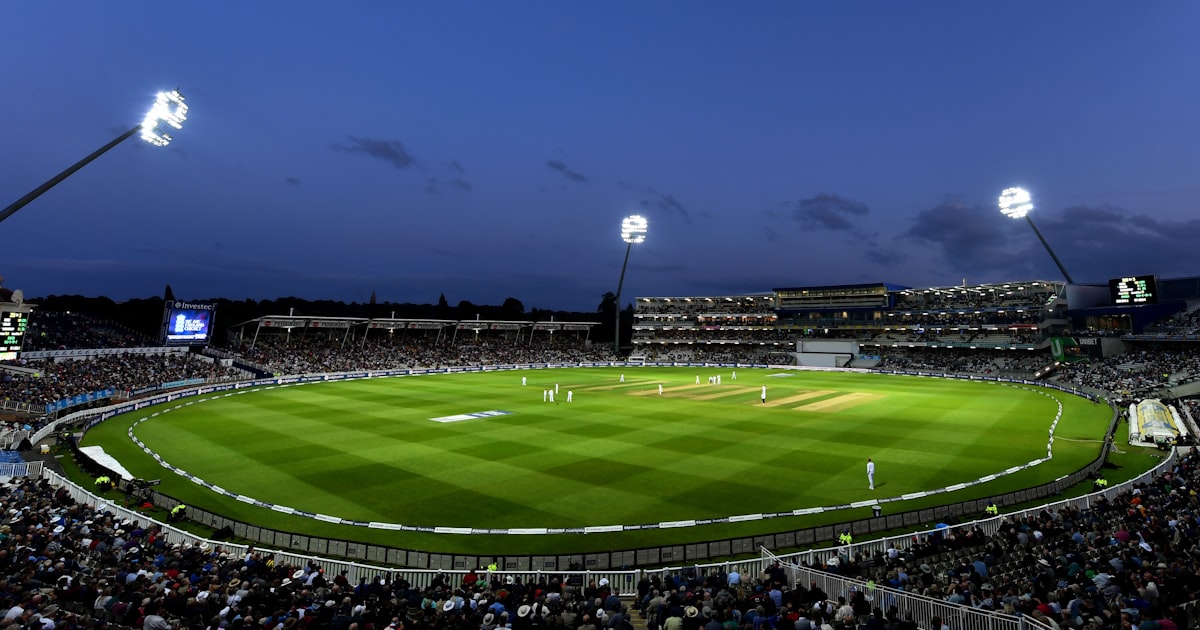
CSK vs DC, IPL 2026, Match 18, Chennai. Ruturaj Gaikwad pads up to a Mukesh Kumar in-swinger. The on-field umpire shakes his head. Delhi review. Ball-tracking shows the ball pitching in line, hitting in line, and clipping the top of leg stump - but the impact zone has half the ball outside the line. The TV umpire reads back: "On-field decision was not out. Pitching: in line. Impact: umpire's call. Decision: stays not out." Replays show what looks like a definite hit on the stumps. The Chepauk crowd erupts. The match continues.
That sequence - common in any high-stakes IPL game - is the clearest illustration of why the rule remains contested. The ball-tracking shows the ball clipping the stumps; the rule says the on-field umpire's decision stands.
A Short History
DRS - the Decision Review System - was introduced experimentally in 2008 and adopted globally for ICC events from 2011 onwards. The umpire's call concept is intrinsic to the system: if the ball-tracking data falls within a defined "margin of uncertainty," the on-field umpire's original decision stands.
The rationale is technological, not philosophical. Ball-tracking systems (Hawk-Eye, Virtual Eye, others) are accurate but not perfect. The system's manufacturers publish error margins of typically 2-5 millimetres. The umpire's call rule essentially says: where the data falls inside that uncertainty band, the human judgement is the deciding signal.
The current 2026 IPL playing conditions, ICC playing conditions and most domestic competitions all use the umpire's call mechanism in broadly the same form.
How It Works In 2026
For an LBW review, three conditions are evaluated:
- Pitching: the ball must pitch in line with the stumps (or just outside off, depending on shot offered).
- Impact: the impact point on the pad must be in line with the stumps (or just outside off, again depending on shot).
- Wickets: the projected path must hit the stumps.
For each of these three checks, the result can be:
| Check | Possible Outcomes |
|---|---|
| Pitching | Outside leg, in line, outside off |
| Impact | Outside off, in line, umpire's call |
| Wickets | Missing, hitting, umpire's call |
If any of impact or wickets returns "umpire's call," the original decision stands.
For the impact check, the rule is: if the centre of the ball is in line with the stumps, the impact is in line; otherwise, if any part of the ball is in line, it is umpire's call.
For the wickets check, the rule is: at least 50 percent of the ball must be hitting the stumps for the decision to be reversed; less than that is umpire's call (decision stands).
Recent IPL And International Examples
| Year | Match | Decision Type | Outcome |
|---|---|---|---|
| 2024 | IND vs PAK T20 WC | LBW review | Umpire's call - stayed out |
| 2025 | IPL Final | Multiple reviews | Two umpire's call swings |
| 2026 | CSK vs DC Match 18 | LBW review | Umpire's call - stayed not out |
| 2026 | RR vs MI Match 12 | Caught behind | Cleanly overturned (no umpire's call) |
The 2026 season has produced multiple high-profile umpire's call decisions, with social-media reaction predictably split.
For broader DRS-and-umpiring context, our soft signal abolished explainer covers another technology-related reform.
The Critic Case
The critic case has three pillars.
First, the rule rewards an arbitrary asymmetry. If the on-field umpire gives not out, ball-tracking showing the ball clipping the stumps does not overturn it. If the on-field umpire gives out, the same ball-tracking data does not overturn that either. The decision direction is preserved by the technology gap, not corrected by it.
Second, the rule confuses the casual viewer. Television graphics show the ball hitting the stumps; the decision stays the same. The viewer cannot rationalise what they have seen on screen.
Third, the rule preserves human bias. If the on-field umpire's instincts are off in a given match, the umpire's call rule extends that bias.
The ICC Defense
The ICC's defense is technical. Ball-tracking is not perfect; the published error margins are real. Removing umpire's call would mean treating the ball-tracking data as definitive when it is not. The umpire's call rule reflects a genuine measurement uncertainty.
A second strand of the defense is preserving the on-field umpire's role. Cricket has historically valued human judgement; the umpire's call rule honours that tradition.
A third strand is consistency. The rule has been applied for over a decade and is broadly understood by players. Removing it would create a transition period of confusion.
Common Misconceptions
The most common is that umpire's call applies even when the ball-tracking shows a clear hit on middle stump. It does not - if the projected path shows the ball hitting the stumps clearly (more than 50 percent of the ball hitting), the decision is reversed regardless of the original on-field call.
The second is that umpire's call works the same way in pitching, impact and wickets. It does not - pitching is binary (in line or outside), while impact and wickets have the umpire's call middle band.
The third is that the rule has been recently updated. It has not - the framework has been broadly stable since 2017.
For broader IPL context, our IPL points table tracks the season. Fantasy followers can track related picks via our Dream11 hub. For tactical context on the free hit rule and concussion substitute rule, the modern playing-conditions environment is the operating context.
Will The Rule Change?
Probably not soon. Ball-tracking accuracy is improving year on year, but the published margins are still real. The ICC's position is that umpire's call will stay until the technology can be relied upon to within sub-millimetre accuracy. That is unlikely before 2028.
FAQ
What is umpire's call? A DRS ruling that says, where ball-tracking data falls within a defined uncertainty margin, the on-field umpire's original decision stands.
Why does the ball "hitting the stumps" not get given out? If less than 50 percent of the ball is hitting, the projected path is treated as inside the uncertainty band, and the on-field decision stands.
Has the ICC defended the rule? Yes - the ICC's position is that ball-tracking is not perfect, and the rule reflects a genuine measurement uncertainty.
Does the rule apply in IPL? Yes. IPL playing conditions follow the ICC umpire's call framework.
Will the rule change soon? Unlikely. The ICC has not signalled any near-term review.
Share this article
Karthik Iyer
Expert in: ExplainerCricket analyst and content writer at CricJosh, covering Explainer with 473 articles published.
Related Articles