Lord's Test Venue Guide 2026: Pitch, Records & Visitor Notes

Share this article
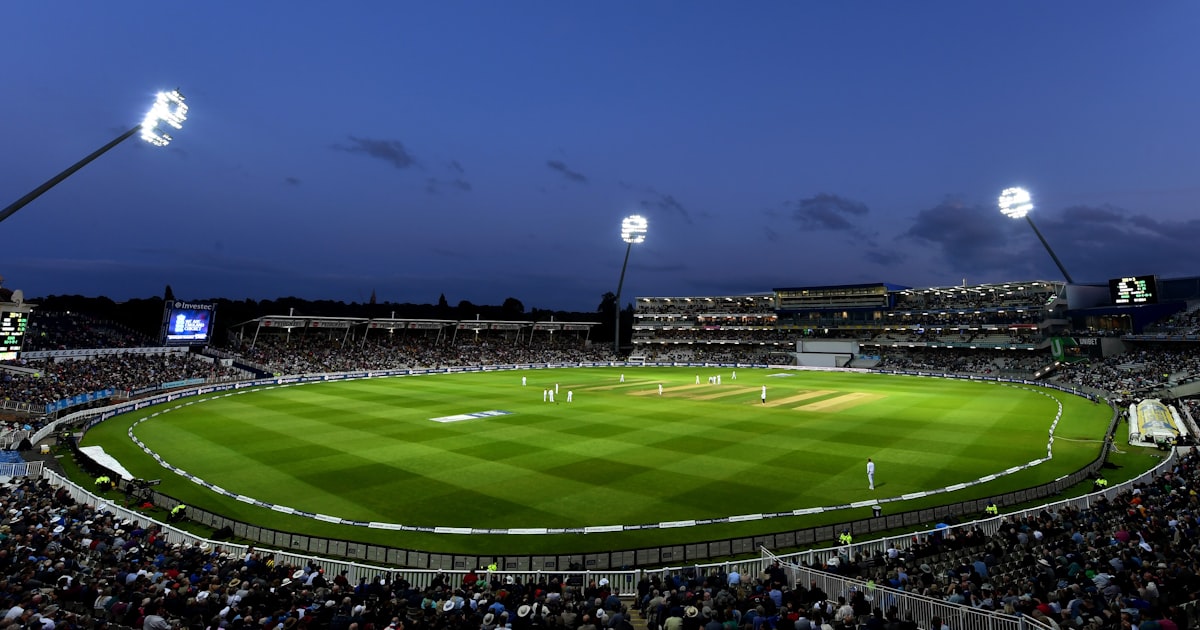
Lord's Cricket Ground in St John's Wood has called itself the Home of Cricket for two centuries, and the title has stuck because nobody else has had a credible claim. The third of three grounds Thomas Lord opened between 1787 and 1814, today's Lord's hosts the WTC Final cycle, the Pataudi Trophy when India tours, the Ashes when Australia visits, and a busy summer of County Championship and The Hundred fixtures.
This is the evergreen Lord's primer for fans planning a visit in 2026 — from the headline records to the practical St John's Wood notes for the ten minutes between Marylebone Station and the Grace Gates.
Capacity, location and the basics
- Address: Lord's Cricket Ground, St John's Wood, London NW8 8QN
- Owner / operator: Marylebone Cricket Club (MCC)
- Capacity: approximately 31,100 seated, with stand redevelopment between 2017 and 2022 adding around 2,600 seats to take the maximum to roughly 31,600, per Lord's official venue information
- Nearest tube station: St John's Wood (Jubilee Line, Zone 2) — approximately five minutes' walk to the Grace Gates
- First match at the current site: 22 June 1814, MCC vs Hertfordshire
The square sits on land MCC leased from the Eyres family, on a site that previously contained a duck pond. The land's natural incline is what produces the Lord's slope — the 2.5-metre drop across the playing surface from the Pavilion End to the Tavern End that defines the venue's seam-bowling character.
For comparison with English Test grounds visited on the India tour of England 2026, Lord's is the second-largest English Test venue by capacity behind The Oval.
A short history (the version you need before a Test match)
Lord's is named for Thomas Lord, a Yorkshireman who established his first cricket ground in 1787 in what is now Dorset Square, central London. The MCC moved to the second Lord's ground in 1811 and to the present St John's Wood site in 1814.
Some of the headline historical moments that have happened at Lord's, per Britannica's Lord's Cricket Ground entry:
- 1928: Presentation of the Ashes urn to MCC, where it has remained ever since.
- 1930: Don Bradman's 254 for Australia against England, still considered one of the greatest Test innings ever played.
- 1975, 1979, 1983, 1999, 2019: Five men's ODI World Cup finals, including the 2019 final between England and New Zealand decided on a boundary count after a tied match and a tied super over.
- 1993, 2017: Two women's World Cup finals, the second of which (England vs India) is widely credited with kickstarting the modern era of Indian women's cricket.
- 2025: South Africa beat Australia by five wickets in the WTC Final to lift their first ICC Test title.
Lord's hosted its 100th Test match in June 2000, when England beat the West Indies by two wickets — a fixture that ended on the Saturday because all five days were not needed.
The square, the slope and what the pitch actually does
Lord's is famous for the slope and the pavilion. The slope is the more important.
The 2.5-metre fall from the Pavilion End to the Tavern End across the square produces:
- A natural angle into right-handed batters' pads from the Pavilion End for right-arm seamers (the ball follows the slope back down the line of leg stump).
- A natural away-shape from the Pavilion End for right-arm seamers who can hold the seam upright (the ball drifts up the slope).
- A natural angle across right-handed batters from the Nursery End for left-arm seamers — Wasim Akram in his prime, Mitchell Starc in his.
The square itself produces, on average, first-innings totals in the 280-310 range across June Tests since 2010, per ESPNcricinfo's Lord's records. The all-time records are Australia's 729 for 6 against England (highest team score) and Graham Gooch's 333 against India in 1990 (highest individual score). For the broader context on Test scoring records, see our reference list on the highest individual score in Test cricket history.
Test records to know before you go
| Record | Holder | Year |
|---|---|---|
| Highest team total | Australia, 729/6 | 1930 |
| Highest individual score | Graham Gooch (England), 333 | 1990 |
| Best bowling, innings | Ian Botham, 8/34 | vs Pakistan |
| Best bowling, match | Bob Massey, 16/137 | Australia vs England, 1972 |
| Most Tests hosted | 148 (and counting) | as of May 2026 |
Lord's has produced 53 wins for the team batting first and 44 wins for the team batting second across its Test history — slightly favouring the side that bats first, but with a meaningful share of bowl-first wins driven by the early-summer green strips.
The visitor's guide: getting there, eating, drinking, sightseeing
Getting to Lord's
- Tube: St John's Wood (Jubilee Line) is the closest station, approximately five minutes' walk to the Grace Gates on St John's Wood Road. Marylebone (Bakerloo Line, plus rail) is a 15-minute walk and useful if you are coming in from Birmingham or the Midlands.
- Car: parking is extremely limited around Lord's on match days; MCC strongly discourages driving. Use the tube or pre-book parking at one of the NCP car parks in Maida Vale.
- From central London: the Bakerloo Line from Oxford Circus (change at Baker Street to Jubilee) takes around 15 minutes door-to-door.
Eating and drinking around the ground
The Tavern Stand pub at Lord's itself is open on match days and is the traditional pre-play stop for those with bay-side seating. Outside the ground, St John's Wood high street offers:
- Soutine — a London bistro classic, ideal for a pre-Test breakfast on a 10am-start Test day.
- The St John's Wood Tap — modern pub a short walk from the Grace Gates.
- Pizzeria Pappagone — Neapolitan-style pizza, family-friendly, useful for evening sessions when stumps land at 6:30pm.
Sightseeing within walking distance
- Abbey Road Studios (10 minute walk from the Grace Gates) — the famous Beatles crossing is approximately five minutes from Lord's.
- Regent's Park (15 minute walk) — Queen Mary's Gardens are particularly worth the detour in early summer.
- Little Venice (15 minute walk west) — canalside cafes and barge trips up the Regent's Canal.
- London Zoo (20 minute walk through Regent's Park) — opened 1828, the world's oldest scientific zoo.
Travel from major UK departure cities
- From Birmingham: Avanti West Coast or LNER from Birmingham New Street to Euston (~1h 15m), then Northern Line to King's Cross / St Pancras and Northern + Jubilee to St John's Wood.
- From Manchester: Avanti West Coast to Euston (~2h 10m), then as above.
- From Edinburgh: LNER East Coast to King's Cross (~4h 20m), then Victoria + Jubilee to St John's Wood.
For visiting Indian cricket fans planning a multi-Test trip, our deeper India tour of England 2026 venue guide covers the full set of English Test grounds with travel notes.
What to bring (and what not to)
- Acceptable: small bags (under 25cm x 19cm x 19cm), refillable water bottles, sun hats, suncream.
- Restricted: large bags must be checked at the cloakroom, alcohol from outside is not allowed, glass bottles are prohibited.
- Recommended: layers — even a June Test at Lord's can be 14°C in the morning and 22°C by mid-afternoon. A waterproof shell is sensible.
When the next Lord's marquee Test is
In the rolling cricket calendar, Lord's hosts:
- The second Test of any India tour of England (per the Pataudi Trophy convention) — see our India tour of England 2026 Test series preview.
- The second Test of the Pakistan tour of England 2026, 27-31 August.
- The Women's T20 World Cup 2026 final on 5 July.
- The WTC Final 2027 in mid-June 2027.
It is the busiest summer the Home of Cricket has had in years.
FAQ
What is the capacity of Lord's Cricket Ground?
Lord's currently seats approximately 31,100 spectators, with redevelopment of the Compton and Edrich stands between 2017 and 2022 adding around 2,600 seats to take the maximum to roughly 31,600.
Why does Lord's have a slope?
The square sits on the natural incline of land MCC leased from the Eyres family in 1814. The slope falls 2.5 metres from the Pavilion End down to the Tavern End across the playing surface, and gives bowlers from each end a different natural angle.
What is the nearest tube station to Lord's?
St John's Wood, on the Jubilee Line, is approximately a five-minute walk from the Grace Gates. It is in Zone 2 and connects to Bond Street in five minutes for travel to and from central London.
Has Lord's hosted ICC World Cup finals?
Yes — five men's ODI World Cup finals (1975, 1979, 1983, 1999 and the famously tied 2019 final), two women's World Cup finals (1993 and 2017), and the 2025 WTC Final. The Women's T20 World Cup 2026 final is also at Lord's on 5 July 2026.
Is parking available at Lord's?
Parking is extremely limited around Lord's on match days, and MCC strongly discourages driving. The recommended option is the Jubilee Line tube to St John's Wood station.
— James Whitfield, CricJosh UK & County correspondent. May 2026.
Share this article
James Whitfield
Expert in: Cricket RecordsCricket analyst and content writer at CricJosh, covering Cricket Records with 8 articles published.
Related Articles

8 min read · 2 May 2026