ICC ODI World Cup 2027 Group B Australia vs England Host-Pair Preview
Share this article
The ODI World Cup 2027 across South Africa, Zimbabwe and Namibia returns the 50-over format to the southern hemisphere with the most ambitious host-pair model the ICC has used in two decades. In Group B, on indicative pre-draw working assumptions, Australia and England headline a pool that almost always shapes one half of the knockout draw. This preview reads the venue, broadcast and squad picture as of May 2026.
The basics, simply
| Item | Indicative position |
|---|---|
| Tournament | ICC ODI World Cup 2027 |
| Hosts | South Africa, Zimbabwe, Namibia |
| Format | 14 teams, two groups of seven, top three to Super Six (subject to ICC final format) |
| Window | October-November 2027 (indicative) |
| Group B AUS-ENG venue (indicative) | Centurion or Durban |
| Broadcast | Foxtel / Seven (AUS); Sky (UK); SuperSport (SA); Star / JioHotstar (IN) |
For the cycle frame, see the ODI World Cup 2027 qualification pathway explainer and the South Africa-Zimbabwe-Namibia co-host fixtures piece.
Venue likelihoods
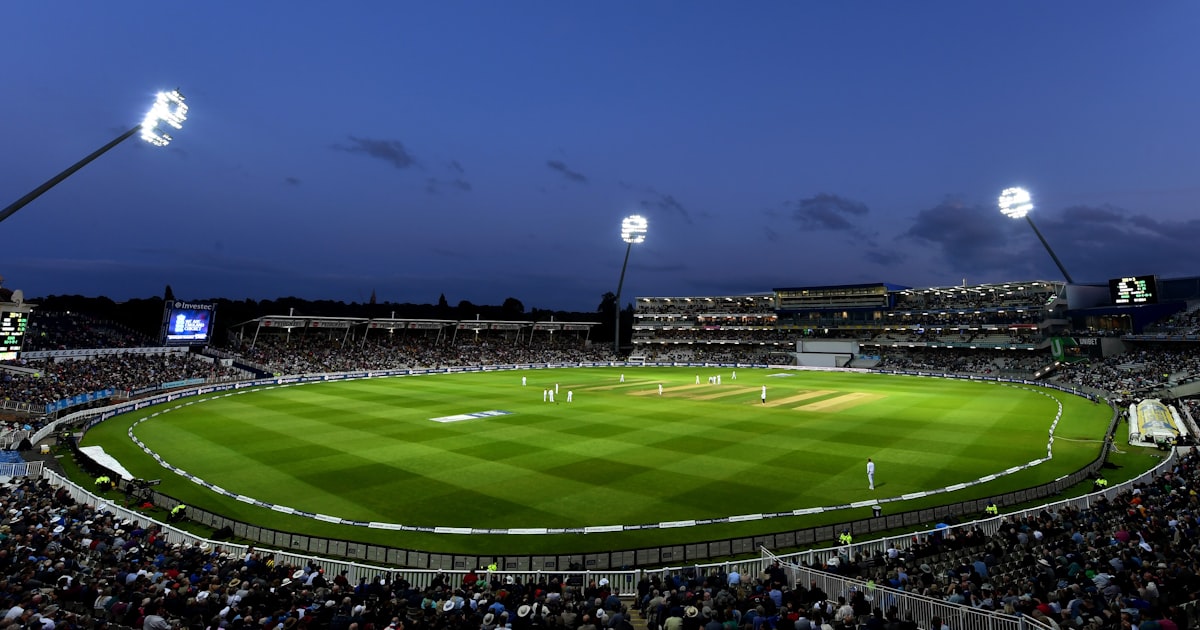
For an Australia-England group-stage fixture, the candidate set is the major South African ODI venues — Centurion (SuperSport Park), Durban (Kingsmead), Cape Town (Newlands) and Johannesburg (Wanderers). Centurion is the most-likely on operational grounds; Durban offers a contrasting coastal surface. Final venues will be confirmed at the ICC fixture release.
What an Australia ODI XI could look like (indicative)
Australia's working ODI core continues to be built around senior batters and a pace-heavy attack. An indicative XI: Travis Head, Mitchell Marsh, Steve Smith, Marnus Labuschagne, Cameron Green, Alex Carey (keeper), Glenn Maxwell, Pat Cummins (captain), Mitchell Starc, Adam Zampa, Josh Hazlewood. Selection and conditions will move two-three names.
What an England ODI XI could look like (indicative)
England's ODI core: Phil Salt, Ben Duckett, Joe Root, Harry Brook, Jos Buttler (keeper, captain), Liam Livingstone, Jacob Bethell, Sam Curran, Jofra Archer, Adil Rashid, Mark Wood, with seam-pace rotation depending on conditions. The shape — top-order accumulation, attacking middle, two strike-pacers — has been stable through the 2026 cycle.
The tactical picture
South African ODI cricket rewards two skills above all others: new-ball seam bowling and middle-overs spin. Australia have both — Cummins, Starc, Hazlewood as a pace trio, Zampa as the leg-spin enforcer. England have the pace match in Archer and Wood, with Rashid leading the spin. The match will likely be decided by the all-rounder layers — Green and Maxwell for Australia; Bethell and Curran for England. Whichever set holds the middle overs while contributing 50+ with the bat tends to set up the win.
Conditions and surface frame
Centurion is the most batter-friendly major South African venue, with shorter boundaries and high carry. Durban's coastal humidity helps reverse swing late. Cape Town and Johannesburg have their own profiles. Both Australia and England arrive with extensive pre-cycle exposure to South African conditions, which removes the early-tournament adjustment penalty other teams face.
Broadcast and ticketing
Foxtel and the free-to-air partner (typically Seven for cricket) will hold Australian rights, subject to confirmation. Sky Sports will hold UK rights. SuperSport holds South Africa rights as host broadcaster. Star / JioHotstar will carry the match in India. Ticketing will route through Cricket South Africa's host platform with ICC oversight, in a typical two-phase ballot-then-general-sale model.
Why this match shapes seeding
In a 14-team format with Super Six progression, the group-stage results compound. A winner of an Australia-England head-to-head likely tops the group, which lightens the Super Six matchup slate. A loser does not get to reset; group results carry. That makes a fixture between two of the world's top-three ODI sides high-stakes long before the knockout stage.
What to watch in the build-up
Five signals. First, the ICC fixture release — venue and date binding. Second, the bilateral cricket both sides play through 2026-27 — Australia's home summer, England's tours of Pakistan and South Africa. Third, captaincy continuity. Fourth, senior-pacer fitness (Cummins, Starc for AUS; Archer, Wood for ENG). Fifth, the Champions Trophy 2027 result, which sets form context seven months before the World Cup.
Forward look
Australia and England continue to set the standard for ODI cricket outside the subcontinent. In a 2027 World Cup hosted across three southern-African nations, the head-to-head will be one of the most-watched non-IND-PAK fixtures of the cycle. We will refresh this preview as the ICC fixture release, broadcast partners and ticketing platforms firm up. The frame here is indicative; the match itself, on current form, is too close to call.
Share this article
Vikram Bhatt
Expert in: InternationalCricket analyst and content writer at CricJosh, covering International with 103 articles published.
Related Articles

4 min read · 21 May 2026
4 min read · 21 May 2026
5 min read · 21 May 2026